Plenary Speakers
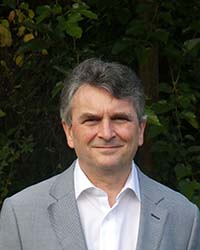
Ghent University – IMEC, Belgium
Title: Material Diversity in Silicon Photonics: An Opportunity or a Challenge?
Abstract:
In the past two decades, mature industrial platforms have been established for the manufacturing of Silicon-on-Insulator photonic integrated circuits (PICs). More recently the same has happened for silicon nitride PICs. Now there is a large research interest to enrich such platforms with new materials, either to boost the performance of the building blocks or to create new functionalities altogether. The diversity of such new materials is large. This trend opens up many new opportunities for new applications and markets, some of which are high-volume, but also creates important challenges for the development of industrial value chains.
Biography:
Roel Baets is an emeritus professor at Ghent University and imec. For many years he has chaired the Photonics Research Group at Ghent University – imec and has made contributions to research on integrated photonics (silicon, silicon nitride, III-V) and its applications in datacom/telecom as well as in medical and environmental sensing. He has founded and has chaired ePIXfab, the European Silicon Photonics Alliance, and continues to serve the silicon photonics community at large in advisory roles. He is a Fellow of IEEE, EOS and Optica. He has been recipient of amongst others the 2020 John Tyndall Award and the 2023 IEEE Photonics Award.

Dr. Nicolas K. Fontaine
Nokia Bell Labs, USA
Title: From Space Division Multiplexing to Fiber Sensing
Abstract:
For the past 15 years, Space-Division Multiplexing (SDM) has been setting records for per-fiber capacity across all major optical communication conferences. We are now seeing the transition from the lab to real-world commercial deployments in subsea systems and data centers. I will describe some of the key technologies, such as high-port-count mode multiplexers, which have enabled these record-breaking experiments.
Hollow-Core Fiber (HCF) can now outperform single-mode fiber across multiple wavebands, from the visible spectrum to the 2μm region. I will present our recent experiments characterizing HCF properties using high-sensitivity Optical Frequency Domain Reflectometry (OFDR) techniques. Additionally, I will offer my outlook on where I believe SDM and HCF will fit into the future of global telecommunication networks.
Finally, our single-mode fiber networks span the entire globe. Fibers traverse the deepest ocean basins and exist on almost every continent. With high-sensitivity and long-range OFDR, we can now listen to environmental signals in the deep ocean up to 6,000 km from the shore nearly instantaneously. By leveraging our entire global network, we can build a global-scale observatory of our planet.
Biography:
Nicolas Fontaine obtained his Ph. D. in 2010 at the University of California, Davis in the Next Generation Network Systems Laboratory in Electrical Engineering. In his dissertation he studied how to generate and measure the amplitude and phase of broadband optical waveforms in many narrowband spectral slices, in addition to early work in swept wavelength interferometry for backscatter characterization of photonic devices. He joined Bell Labs where he developed spatial mode multiplexers that enabled high mode count mode division multiplexed telecommunication systems. He is the department head of Silicon Photonics and a distinguished member of the technical staff at Nokia Bell Labs. He has chaired numerous conferences including the optical fiber communications conference. He is a Fellow of OPTICA and Senior Member of the IEEE and authored more than 400 papers in scientific journals and conferences. When he is not working, he loves jazz, and hiking and skiing in the mountains.
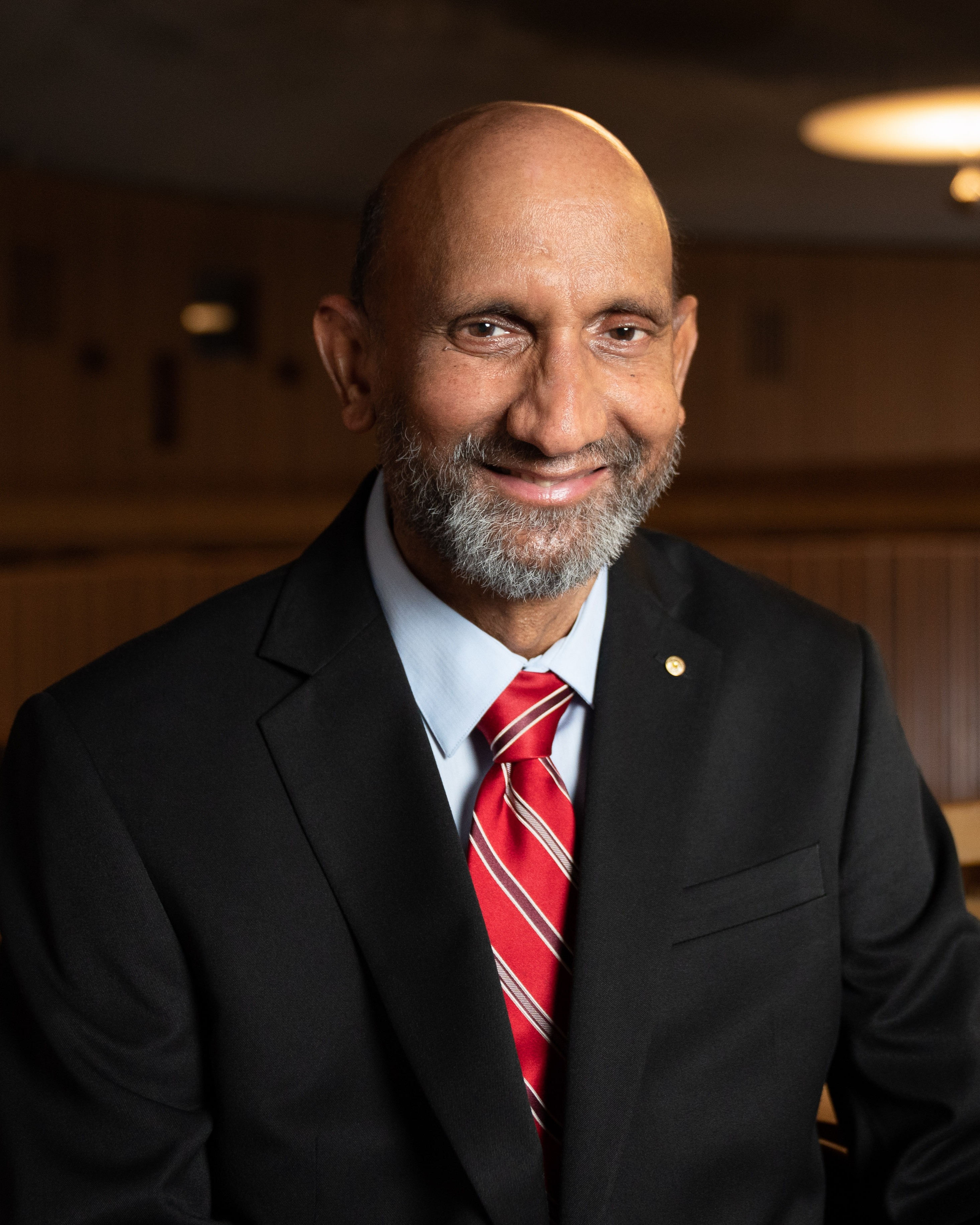
Prof. Chennupati Jagadish
The Australian National University/Australian Academy of Science, Australia
Title: Semiconductor Nanostructures for Optoelectronics Applications
Abstract:
Semiconductors have played an important role in the development of information and communications technology, solar cells, solid state lighting. Nanowires are considered as building blocks for the next generation electronics and optoelectronics. In this talk, I will present the results on growth of nanowires, nanomembranes and microrings and their optical properties. Then I will discuss theoretical design and experimental results on optoelectronic devices. In particular, I will discuss nanowire and micro-ring lasers and integration of nanowires and microrings. Nanowire based energy devices such as solar cells and photoelectrochemical (PEC) water splitting will be discussed. I will present the results on chemical and bio sensors and neuro-electrodes to study brain signaling to understand dementia. Future prospects of the semiconductor nanostructures will be discussed.
Biography:
Professor Jagadish is a Distinguished Professor Emeritus of Physics and Electronic Materials Engineering at the Australian National University. He has made pioneering contributions in semiconductor optoelectronics and nanotechnology. He has published more than 800 journal papers, co-authored a book and co-edited 15 books. He is a fellow of 16 Science and/or Engineering Academies of Australia, US, UK, China, Europe, India, The World Academy of Sciences and received many awards including UNESCO Medal for Nanotechnology, IEEE Photonics Award, IEEE Nanotechnology Pioneer Award. He has received Australia’s highest civilian honor, AC, Companion of the Order of Australia, in 2016 for his contributions to physics and engineering, in particular nanotechnology. He has received 2023 Pravasi Bharatiya Samman Award from the President of India. He is currently serving as the President of the Australian Academy of Science and in the past served as President of IEEE Photonics Society, IEEE Nanotechnology Council and Australian Materials Research Society.

Prof. Arnan Mitchell
RMIT University, Australia
Title: Centre of Excellence in Optical Microcombs for Breakthrough Science: Microcomb Technology to Unlock a New Wave of Photonic Solutions
Abstract:
This talk will present an overview of our recent work at the ARC Centre of Excellence in Optical Microcombs for Breakthrough Science (COMBS). The Centre sees a future where optical frequency combs can be as compact, low-cost and accessible as today’s consumer electronics. We are exploring the applications of integrated microcombs and where they might have impact on society in fields spanning high-speed communications, machine learning, seismology, biomedical imaging, environmental monitoring, and even searching for life on other planets. Along with these applications, we are exploring the global microchip manufacturing ecosystem that will help bring the optical frequency comb out of the lab and into the real world.
Biography:
Professor Arnan Mitchell is a Distinguished Professor in the School of Engineering at RMIT University, Director of the RMIT Micro Nano Research Facility (MNRF) and is Director of the recently Announced ARC Centre of Excellence for Optical Microcombs for Breakthrough Science (COMBS). He is a highly multidisciplinary researcher working in micro-chip technologies combining light, sound, fluids and electronics with applications spanning radar systems for defense, high speed fiber optic communications and point of care diagnostic systems for biomedicine.

Prof. Martin Wegener
Karlsruhe Institute of Technology, Germany
Title: Recent Progress in 3D Laser Nanoprinting for Optics and Electronics
Abstract:
We review our recent progress on 3D laser nanoprinting. In particular, we emphasize progress with respect to how many voxels can be printed per second and with respect to printable materials beyond polymers. For example, printing speeds of 10^8 voxels/s and beyond have become accessible by multi-focus multi-photon laser printing (based on laser-printed micro-optical components) and by holographic printing based on two-photon and two-step absorption, respectively. Using photothermal cw-laser nanoprinting, functional microelectronic circuits based on semiconductors and metals have been realized.
Biography:
After completing his Diplom and PhD in physics at Johann Wolfgang Goethe-Universität Frankfurt (Germany) in 1986 and 1987, respectively, he spent two years as a postdoc at AT&T Bell Laboratories in Holmdel (U.S.A.). From 1990-1995 he was professor (C3) at Universität Dortmund (Germany), since 1995 he is professor (C4, later W3) at Institute of Applied Physics of Karlsruhe Institute of Technology (KIT). Since 2001 he has a joint appointment as department head at Institute of Nanotechnology (INT) of KIT, from 2016-2022 he was one of three directors at INT. From 2001-2014 he was the coordinator of the DFG-Center for Functional Nanostructures (CFN) at KIT. Since 2018 he is spokesperson of the Cluster of Excellence 3D Matter Made to Order. His research interests comprise ultrafast optics, (extreme) nonlinear optics, optical laser lithography, photonic crystals, optical, mechanical, electronic, and thermodynamic metamaterials, as well as transformation physics. This research has led to various awards and honors, among which are the Alfried Krupp von Bohlen und Halbach Research Award 1993, the Baden-Württemberg Teaching Award 1998, the DFG Gottfried Wilhelm Leibniz Award 2000, the European Union René Descartes Prize 2005, the Baden-Württemberg Research Award 2005, the Carl Zeiss Research Award 2006, the Hector Research Award 2008, the SPIE Prism Award 2014 for the start-up company Nanoscribe GmbH, the Stifterverband Science Award – Erwin-Schrödinger Prize 2016, and the Technology Transfer Prize of the German Physical Society (DPG) 2018. In 2014, 2015, 2016, 2017, 2018, 2020, and 2021 Clarivate Analytics listed him as “Highly Cited Researcher” (top 1%). He is Member of Leopoldina, the German Academy of Sciences (since 2006), Member of acatech, the National Academy of Science and Engineering (since 2019), Member of the Hector Fellow Academy (since 2013, President from 2016-2022), Fellow of the Max Planck School of Photonics (since 2019), Fellow of the Optical Society of America (since 2008), and Honorary Professor at Huazhong University of Science & Technology, Wuhan, China (since 2014).

Prof. Anatoly V. Zayats
King’s College London, UK
Title: Symmetry-driven Nanophotonics: Chirality and Topology of Light Fields
Abstract:
Light waves can carry both spin and angular optical momenta, and their spin-orbit coupling can be influenced by the symmetry of the electromagnetic field and/or the anisotropy of the medium through which the light propagates. In turn, spin-orbit coupling governs the topology of evanescent waves and the propagation of vector beams. This has intriguing applications in polarisation-enabled control of optical signals or, conversely, in engineering light polarisation. The ability to engineer and manipulate the properties of vector optical wavefronts and pulses—featuring non-uniform polarisation and robust topological properties—is vital for various applications, including imaging, metrology, optical communications, as well as biomedical and quantum technologies. In this talk, we will explore the interaction of complex vector beams that carry longitudinal fields with anisotropic metamaterials and related topological structuring of optical fields. We will discuss a new concept of rotating chiral dipoles for unidirectional chiral scattering, which can be implemented by engineering multipole excitations in helicoidal plasmonic nanoparticles. This concept is important for engineering scattering from chiral nanostructures and optical nano-antennas paving the way for innovative designs and applications of chiral light-matter interactions.
Biography:
Professor Anatoly V. Zayats is the head of the Photonics & Nanotechnology at the Department of Physics, King's College London, where he also leads Nano-optics and Near-field Spectroscopy Laboratory. He is a Co-Director of the London Centre for Nanotechnology and the London Institute of Advanced Light Technologies. His current research interests are in the areas of nanophotonics, plasmonics, metamaterials, plasmocatalysis, nonlinear and ultrafast optics and spectroscopy, photonic spin-orbit interactions, and optical properties of surfaces, thin films, semiconductors and low-dimensional structures. He is a founding Editor-in-Chief of Advanced Photonics journal. He is a Fellow of the Institute of Physics, the Optical Society of America, SPIE, the Royal Society of Chemistry and elected Member of Academia Europaea.
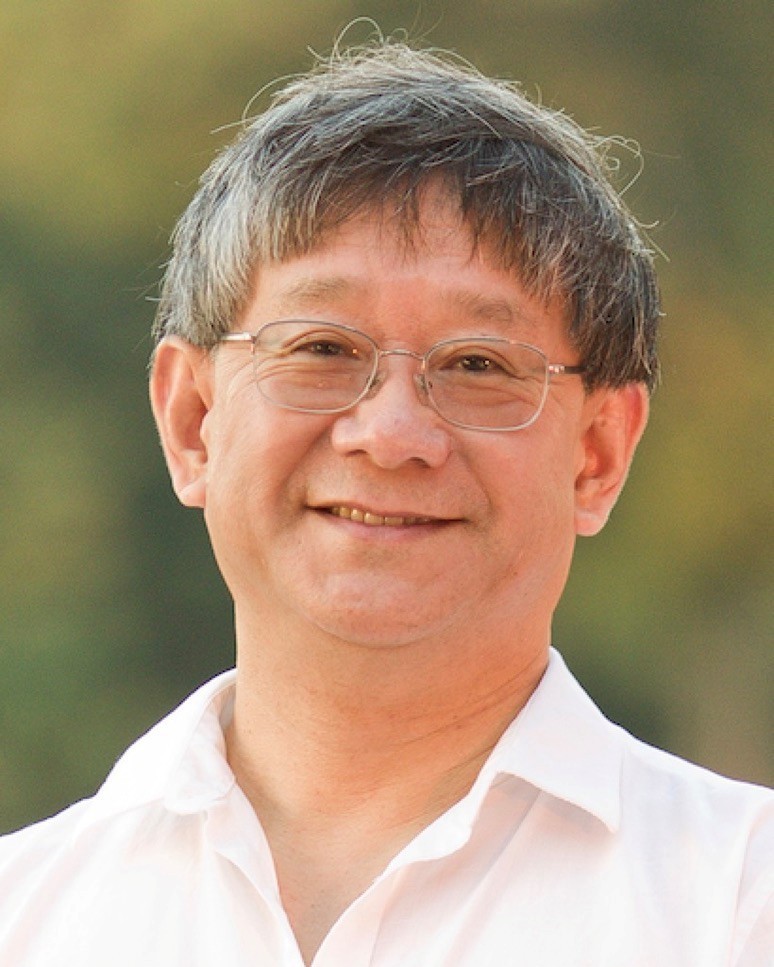
Prof. Xi-Cheng Zhang
University of Rochester, USA
Title: Recent Progress in Terahertz Photonics
Abstract:
Following the steady evolution of THz technology since the late 1980s, the next frontier may be the era of extreme THz science, where strong THz field–matter interactions can be explored and nonlinear THz spectroscopy and imaging can be realized. However, fully seizing these opportunities will require the development of bright, efficient THz sources. Energetic ultrashort laser pulses are widely used to generate intense broadband THz radiation through their interaction with suitable targets.
In this talk, I will present progress in THz liquid photonics—an extension of our earlier work in THz air photonics. Investigating THz generation from liquids may complete the final piece of the matter-phase puzzle in THz photonics. I will also highlight our preliminary experiments conducted at the Laboratory for Laser Energetics, where we used the Multi-TeraWatt (MTW) laser (>10 J pulse energy, sub-ps pulse duration) and the Omega-EP laser (>300 J pulse energy, sub-ps pulse duration) to create microplasmas and study THz wave generation under various laser conditions during pilot tests. We are exploring extreme THz science through THz generation and detection using unique laser systems ranging from <1 J to >1 kJ pulse energy. Our ultimate goal is to develop the world’s most intense THz sources and use single-cycle THz pulses to study nonlinear science.
Looking ahead, we aim to bridge THz science with integrated optoelectronic platforms for sensing, imaging, and communication applications. Our long-term vision is to enable compact, high-performance THz systems that can be deployed in real-world optoelectronic technologies, paving the way toward next-generation THz-integrated photonic devices.
Biography:
Xi-Cheng Zhang, Parker Givens Chair of Optics, was Director of The Institute of Optics, University of Rochester (UR), USA, a foremost institution in optics and optical physics research and education (Jan. 2012–Jun. 2017). Prior to joining UR, he pioneered world-leading research in the field of ultrafast laser-based terahertz technology and optical physics at Rensselaer Polytechnic Institute (RPI), USA (‘92–‘12). At RPI, he is the Eric Jonsson Professor of Science; Acting Head at Department of Physics, Applied Physics & Astronomy; Professor of Electrical, Computer & System; and Founding Director of Center for THz Research. With a B.S. degree (‘82) from Peking University, China, he earned the M.S. (‘83) and Ph.D. degrees (‘86) in Physics from Brown University, USA. Major Honors and Awards: Edwin Land Medal, Optica-Society of Imaging Science and Technology, ’25; Foreign Fellow of Chinese Optical Society (COS) ’24; IRMMW-THz Society Exceptional Service Award ‘23; Foreign member of Russian Academy of Sciences ’22; Humboldt Prize, Alexander von Humboldt Foundation (Germany) ‘18; Australian Academy of Science Selby Fellow (Australia) ’17; Kenneth Button Prize ’14 (Int. Soc IRMMW-THz); William F. Meggers Award ’12 (OSA); Photonics Society William Streifer Scientific Achievement Award ’11 (IEEE); William H. Wiley Award ’09 (Rensselaer). He is a Fellow of AAAS, APS, IEEE, Optica, and SPIE.